

There is a defensible way to rank mountain bike towns and a lazy way. The lazy way polls a magazine audience. The defensible way starts with the International Mountain Bicycling Association, which evaluates destinations against criteria that can be argued with: variety of trail types, total mileage, quality of the riding, and whether the town at the bottom of the descent can feed you and fix your derailleur. Gold is the top tier. It is genuinely hard to earn.
But the designation is applied for, not awarded by survey, and that single administrative fact creates a hole in the map roughly the size of the Colorado Plateau. Towns that never filed paperwork do not appear, no matter how holy the dirt. So this list runs in two movements. First the five American towns that hold Gold. Then five that hold nothing at all and would still be on any honest rider’s list.
One note before the entries. IMBA overhauled the program in late 2025, rebuilding the Ride Center framework and adding a Trail Town designation for places where riding is woven into daily life rather than sold to visitors. Applications now account for what share of trails permit Class 1 e-bikes and which are built for adaptive riders. The tiers below will shift as towns are reevaluated.
1. Park City, Utah
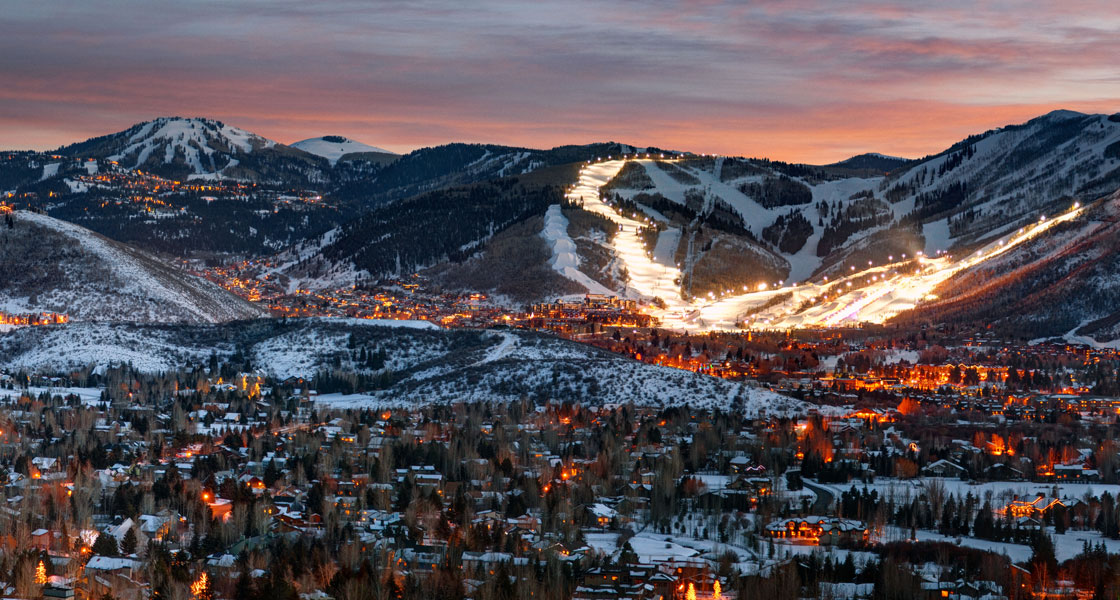
For years Park City was the only Gold-level Ride Center on Earth, which tells you where the bar was set. The network is vast, but the quality that matters is connection: you can clip in at a hotel door and ride into hundreds of miles of singletrack without ever putting the bike on a car, which is the real test of a bike town and one most fail. Lift-served terrain runs all summer, the mining-era main street absorbs the evening, and an international airport sits thirty-five minutes down the canyon. The trade is obvious and unavoidable. Everyone else worked this out too, and Park City has priced accordingly.
2. Aspen and the Roaring Fork Valley, Colorado

Gold arrived here in January 2020, the first in Colorado and only the fifth in the country, and the designation covers an entire valley rather than a single town. Aspen, Snowmass Village, Basalt, Carbondale, and Glenwood Springs share more than 300 miles of quality singletrack, stitched together by the Rio Grande Trail running 42 paved miles end to end, which means you move between trail systems on your own power instead of hiring a shuttle driver. Snowmass lifts riders above 11,000 feet for descents over 3,000 vertical. Down valley at Red Hill, the aspens give way to red rock and cactus inside a single afternoon. It is the rare award that rewards towns for cooperating.
3. Boise and Eagle, Idaho
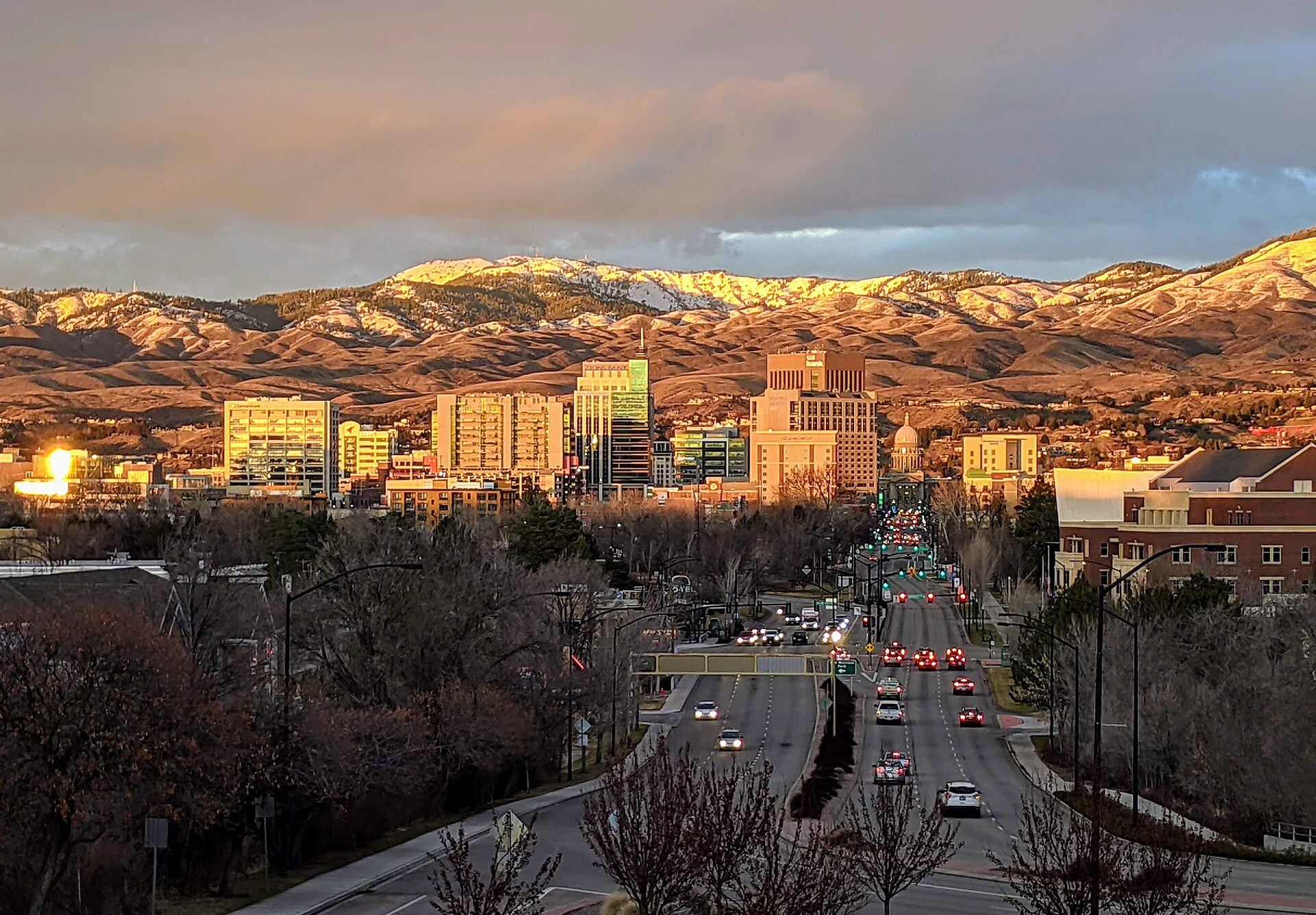
Boise answers a question most riders never think to ask: what if a functioning city, with an airport and a job market and somewhere decent to eat, sat directly against a mountain range full of singletrack? The Ridge to Rivers network climbs out of downtown into the foothills and keeps going, from mellow town laps to genuine backcountry, with a developed bike park in the middle of it. Very few metropolitan areas in America can claim that. The honest caveat is midsummer, when the Boise Front bakes and the tread turns to talcum powder that hangs in the air behind the rider ahead. Come in spring or fall, when the foothills go green and the dirt turns tacky.
4. Duluth, Minnesota
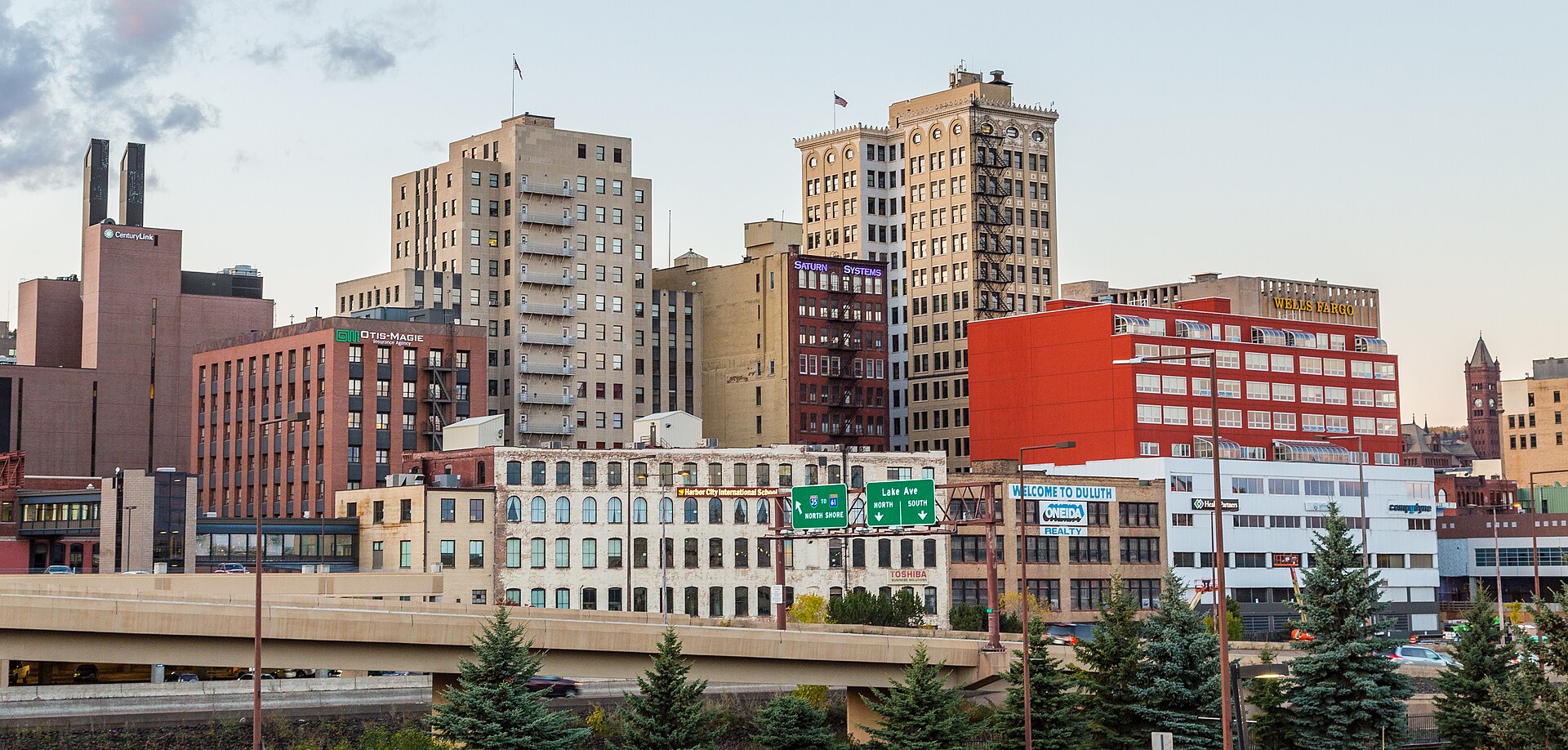
Duluth corrects the assumption that great riding requires mountains. The city is built on a steep basalt ridge above Lake Superior, and it holds more than 110 miles of purpose-built singletrack anchored by the Duluth Traverse, a 42-mile point-to-point that laces five major trail systems together across the length of the city. Spirit Mountain adds lift-served gravity. What makes Duluth genuinely instructive is that none of this was inevitable: a working industrial port decided that trails were infrastructure, funded them, and watched it work. The caveat is the calendar. This is northern Minnesota, the season is honest about its limits, and Lake Superior has never moderated anything gently.
5. Oakridge, Oregon

Oakridge is the smallest name here and the least polished, a former timber town of a couple thousand people in the Cascades that climbed from Silver to Gold on the strength of its dirt and a volunteer crew, the Greater Oakridge Area Trail Stewards, who simply kept building. The riding is long and steep and loamy, old growth and shuttle descents rather than manicured flow. The Alpine Trail is named among the best singletrack in the country by people who have ridden enough to know, and classics like Hardesty and Lawler are the kind of ride you describe to strangers years later. Come for the forest floor, not the amenities. That has always been the entire proposition.
6. Bentonville, Arkansas

Bentonville still carries only Silver, which is the clearest evidence that the ratings lag reality. In fifteen years an Ozark county seat has become the most consequential story in American mountain biking: the Coler Mountain Bike Preserve, the Slaughter Pen system running straight into the town square, an OZ Trails Bike Park with the state’s first chairlift-served gravity, and a 500-mile regional network that earned the country’s first Regional Ride Center designation. The town calls itself the mountain biking capital of the world, which is the kind of claim that should embarrass a place and somehow does not. Ride it in spring or fall. Ozark summers are a wet blanket.
7. Moab, Utah
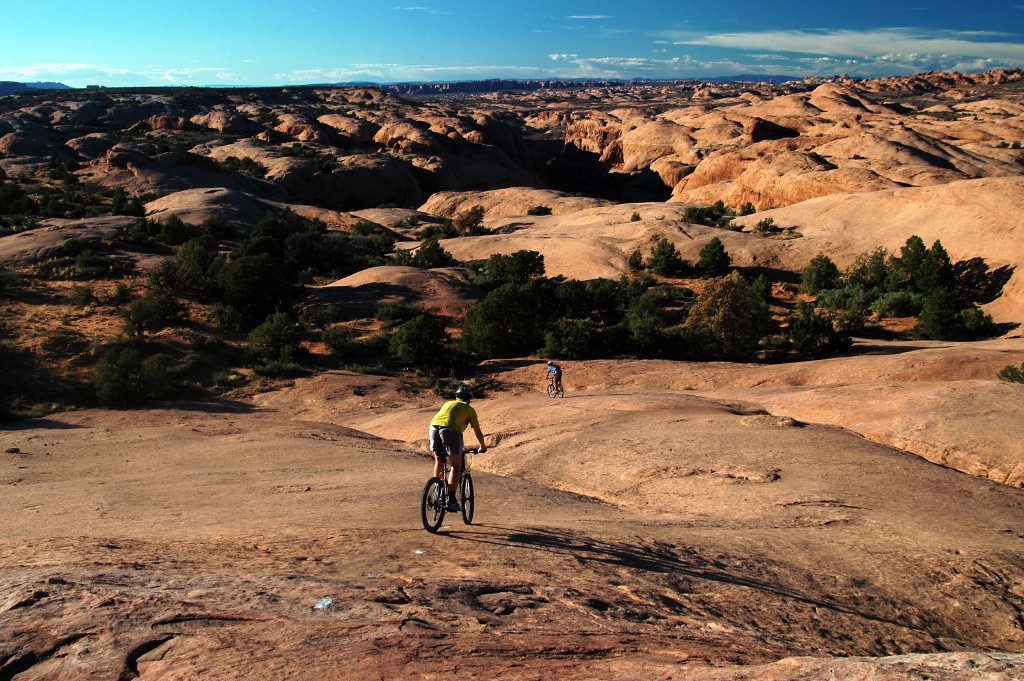
No designation, no application, no need. Moab essentially invented destination mountain biking when riders discovered that Navajo sandstone grips a tire like nothing else on the planet, and the Slickrock Trail remains a strange and holy thing, a route painted onto bare petrified dune where the only trail is a dotted line and your own traction. The Whole Enchilada drops from alpine tundra in the La Sals through aspen, sage, and finally red rock to the Colorado River, roughly 7,000 feet of descent through four ecosystems in one morning. Go in April or October. In July the rock radiates heat like a stovetop and the desert stops negotiating.
8. Sedona, Arizona
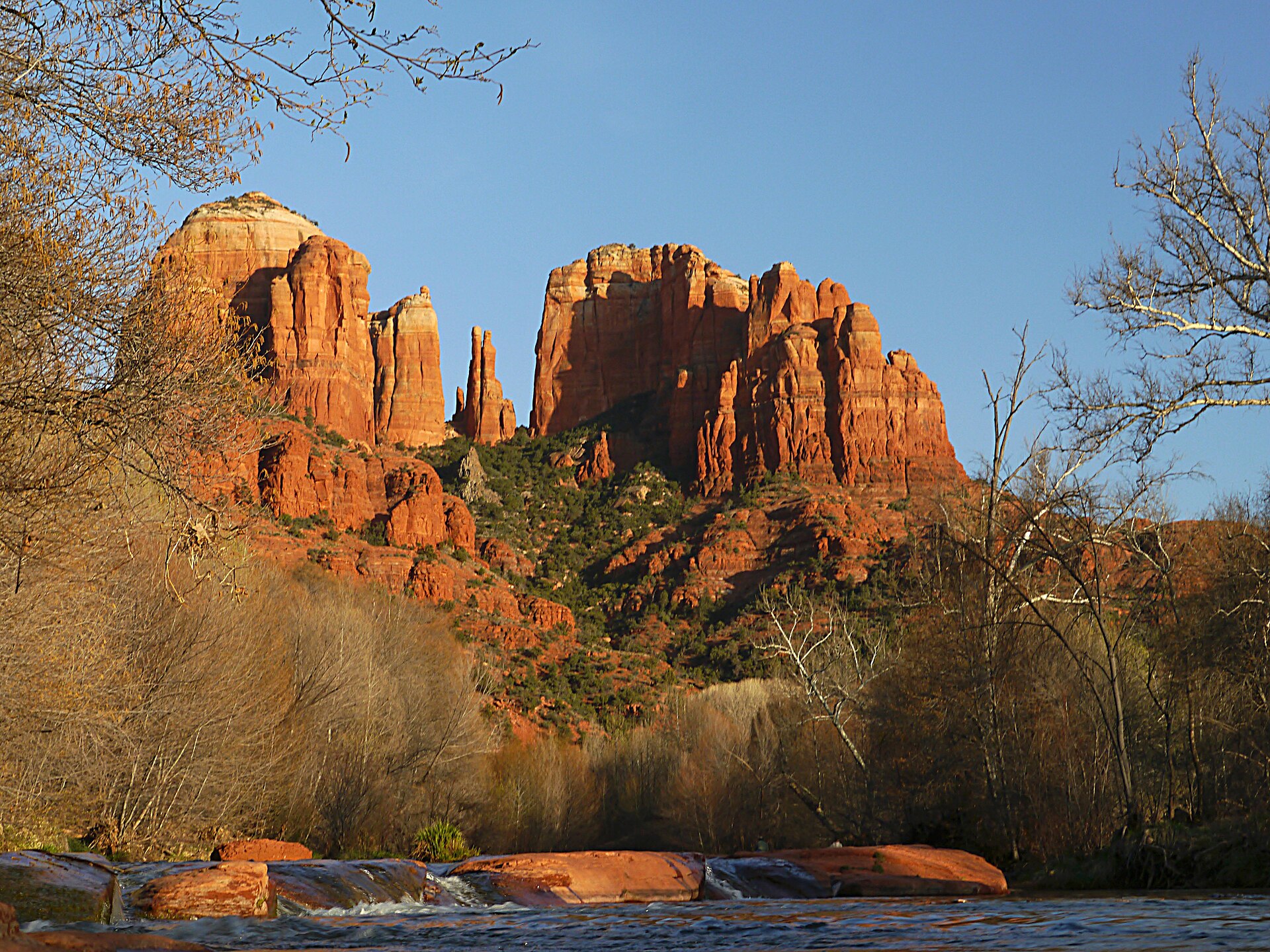
Sedona rides like nowhere else in North America, and riders either love it or quietly hate it, which is a mark of genuine character rather than a flaw. The tread is chunky, ledgy, technical red rock that demands line choice at every turn and punishes coasting, threading between buttes that glow like banked coals in the last hour of light. Hiline and the Hangover are the names people trade. What Sedona lacks is anonymity: it is a small town absorbing several million visitors a year, and the trailheads reflect it. Ride at first light, sleep in West Sedona or the Village of Oak Creek, and let the tour buses have the middle of the day.
9. Bend, Oregon

Bend sits on the dry side of the Cascades in ponderosa forest, and the dirt is volcanic dust so fine and forgiving that riders describe it in the tone usually reserved for powder snow. Phil’s Trail Complex spreads immediately west of town into a web of intermediate flow that is almost impossible to ride badly, while Mrazek and the higher country deliver length and consequence. The town itself has more breweries than a place this size can reasonably justify, which is either the point or beside it. The caveat is the same one Bend has been negotiating for two decades: it is beloved, it is growing fast, and the trailheads fill early on summer weekends.
10. Crested Butte, Colorado
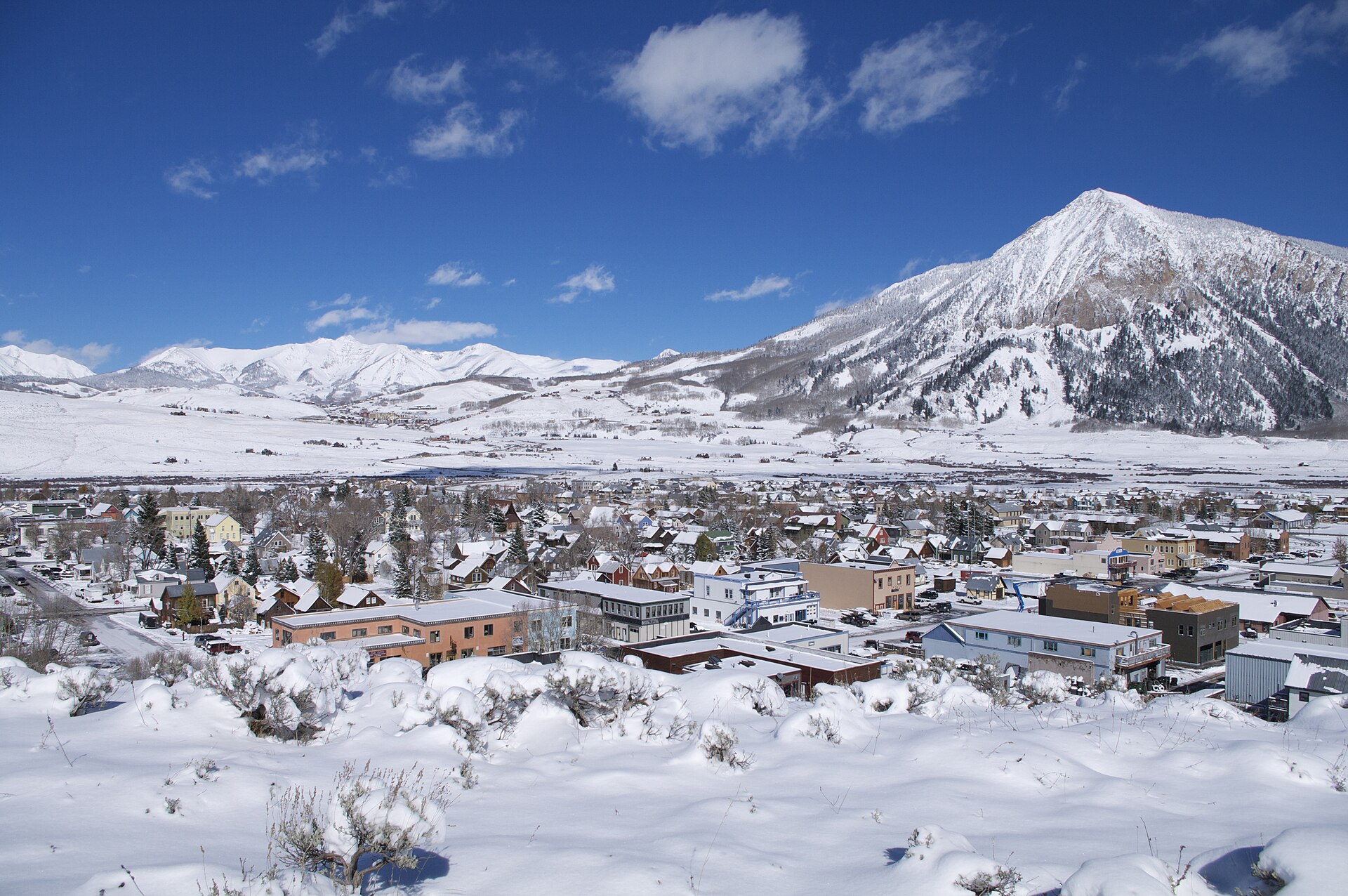
Crested Butte belongs on this list for reasons that are partly historical and entirely earned. When a group of Butte riders rode klunkers over Pearl Pass to Aspen in 1976, the sport as a culture arguably began, and the town has never really stopped. The 401 Trail is the famous one, a high traverse through wildflower meadows so absurdly saturated in July that first-time riders stop pedaling out of sheer disbelief. What makes Crested Butte rare now is its isolation. There is no interstate, no easy connection, no sprawl at the edge of town, and the result is a place that still feels like it belongs to the people who live there.
Use the rankings for what they are worth. IMBA Gold reliably signals depth, variety, and a town that can support a week of riding, and any of the first five will fill that week without repeating a trail. But a standard you have to apply for measures administrative appetite alongside terrain, and the second five are proof. The best ride of your life is at least as likely to be in a town that never filled out the form.
All photographs are freely licensed via Wikimedia Commons. Photographers are credited beneath each image.