

Finding a bed inside a national park is famously hard. The lodges book out months, sometimes years, ahead, the campgrounds fill by dawn, and the dining options run from limited to grim. So most visitors stay in the gateway town just outside the boundary, and those towns are wildly uneven. Some are genuine places with their own reasons to exist. Others are a strip of chain motels and gas stations that happen to sit near something magnificent.
This list judges the towns, not the parks. Every park here is extraordinary by definition; that is not the variable. The variable is what happens when you drive back out through the entrance station at the end of the day. Is there a real main street, a good meal, a reason to linger past the trailhead? The seven below all clear that bar. Each is a town you would enjoy even on a day you never entered the park, which is the truest test of a gateway worth choosing.
We kept this one deliberately short. Seven towns that genuinely stand on their own is a stronger list than fifteen padded with places whose only virtue is proximity.
1. Flagstaff, Arizona
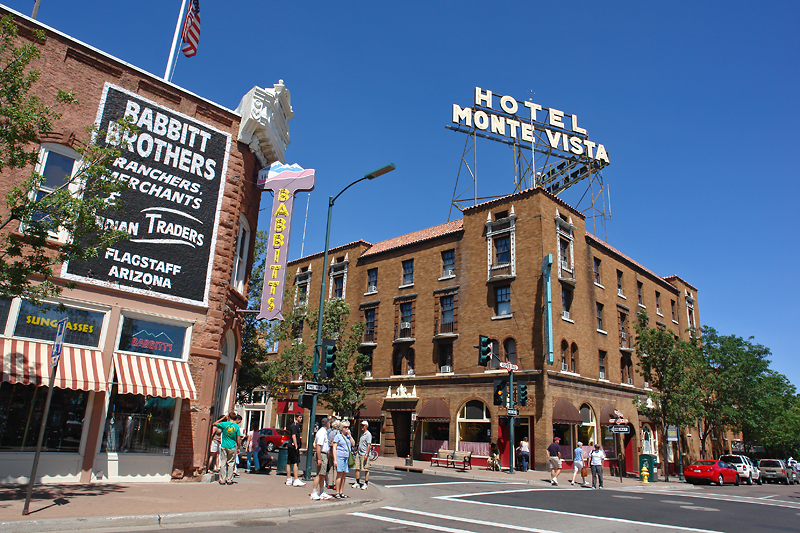
Flagstaff is the rare gateway town that would be a destination even without its park, and it anchors this list for exactly that reason. An hour and a half from the Grand Canyon’s South Rim, it sits at 7,000 feet in the largest ponderosa pine forest in the world, a real mountain college town with a historic Route 66 downtown, serious restaurants, and its own ski hill at Arizona Snowbowl. It is also the world’s first International Dark Sky City, home to Lowell Observatory, where Pluto was discovered, and the night sky here is protected by ordinance. Beyond the Grand Canyon, Sunset Crater, Wupatki, and Walnut Canyon national monuments all sit within a short drive. Most gateway towns give you a park and a bed. Flagstaff gives you a park, a forest, a dark sky, and a town with a genuine life of its own.
2. Springdale, Utah
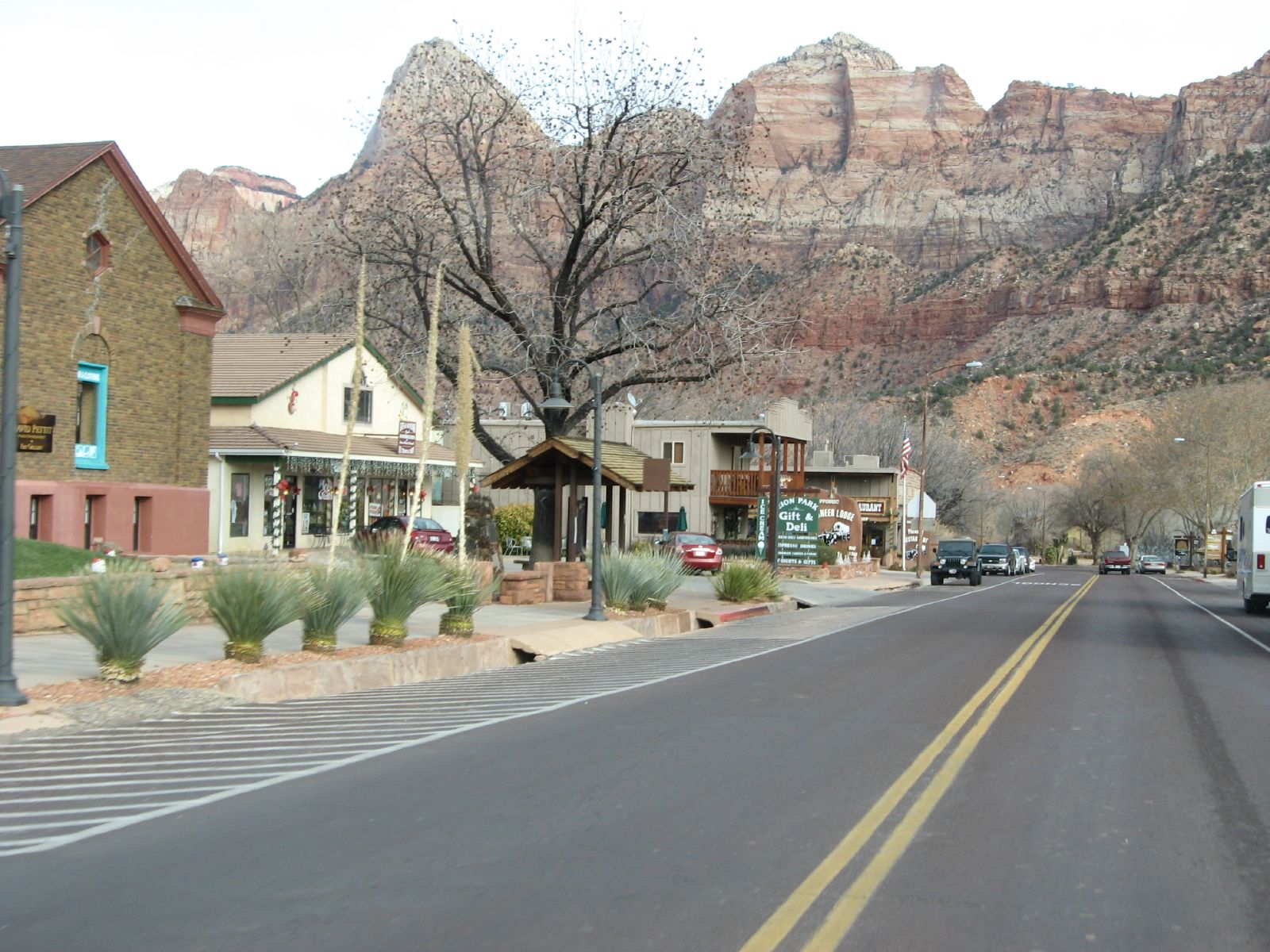
Springdale is the platonic ideal of a gateway town: it sits directly at the mouth of Zion Canyon, tucked beneath red cliffs that glow at sunset, and a free shuttle runs from the town straight to the park entrance so you never move your car. But it has resisted becoming a mere staging area. There are real art galleries, genuinely good restaurants, artisan shops, and some of the darkest skies in the country arching overhead at night. The scale stays small and the setting does half the work; you step out of a restaurant and the walls of Zion are right there. The caveat is its own success: in peak season Springdale and Zion together can feel overrun, so come in shoulder season if you can.
3. Estes Park, Colorado
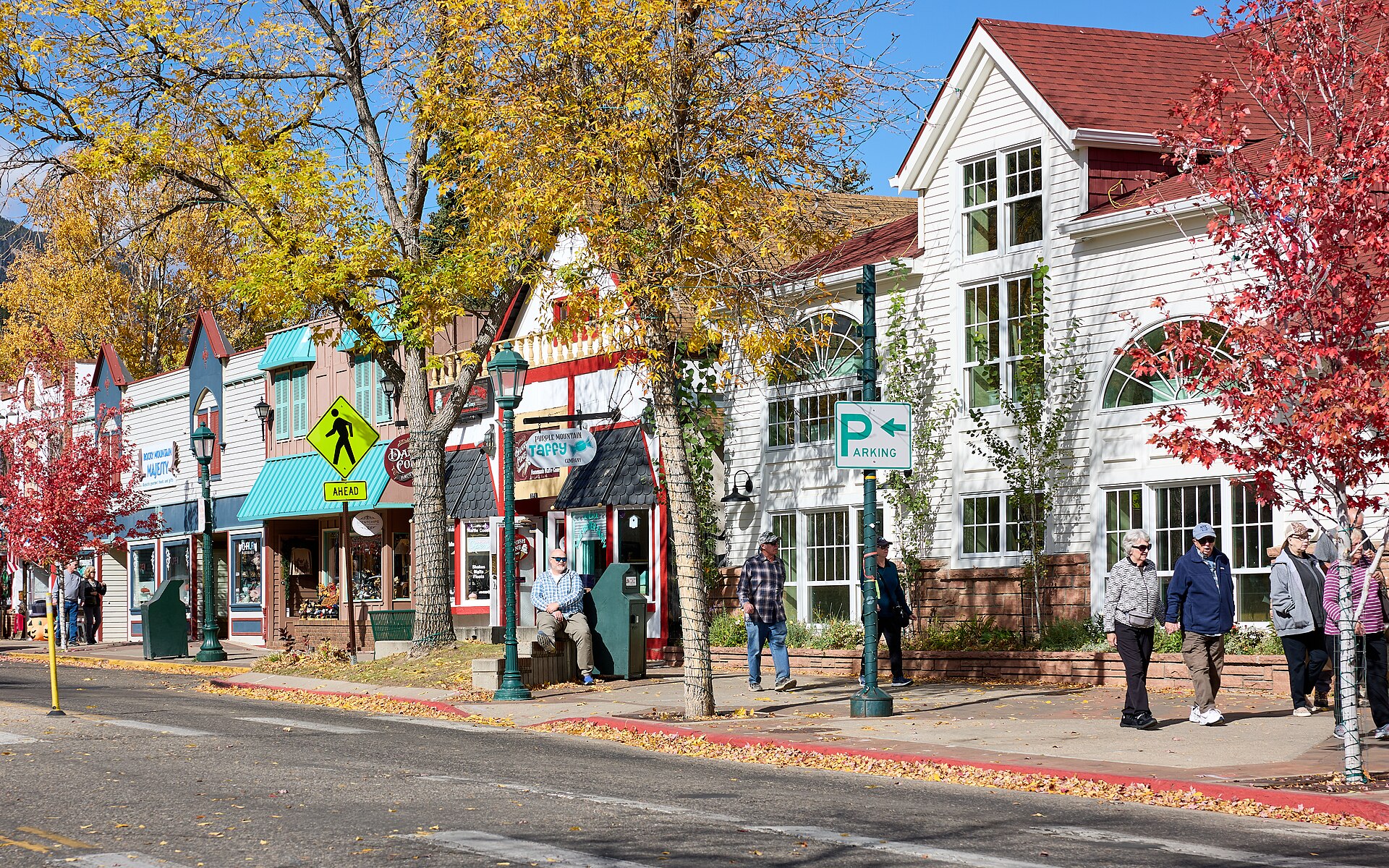
Estes Park is the premier gateway to Rocky Mountain National Park, ten minutes from the Beaver Meadows entrance, with Rockies grandeur in every direction. The town leans into its role with a walkable downtown, the historic 1909 Stanley Hotel that inspired The Shining looming above it, and enough lodging and outfitters to launch any kind of day in the park. A free park-and-ride shuttle helps you skip the notorious summer traffic. It can get busy and unabashedly touristy in July and August, which is the honest tradeoff for being the front door to one of the most visited parks in the country. Come in September for the elk rut, when the bulls bugle through town and the crowds thin.
4. West Yellowstone, Montana
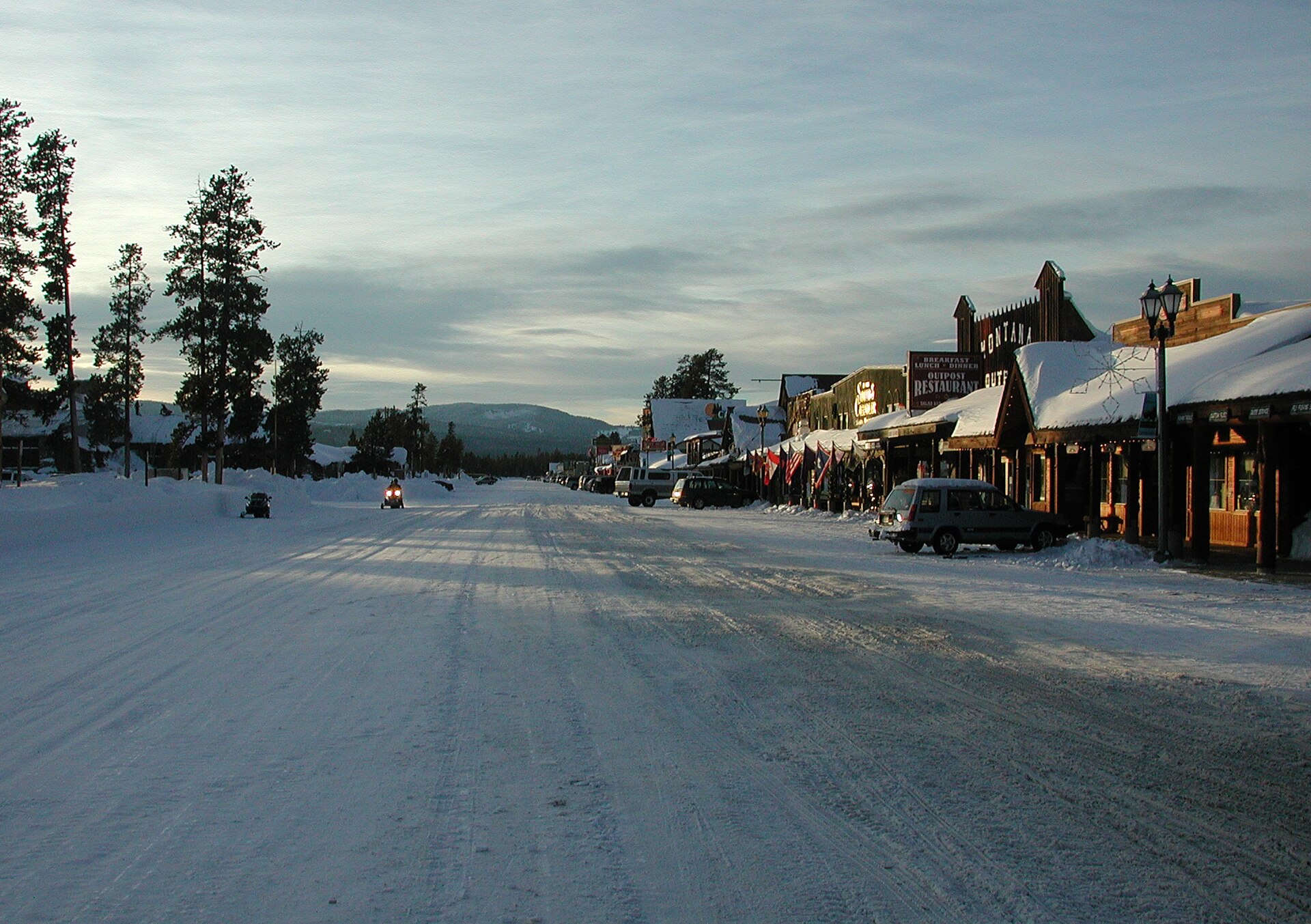
West Yellowstone sits right at Yellowstone’s busiest entrance, and unlike some park-adjacent strips it is a genuine town with year-round life. In summer it is the closest base to Old Faithful and the geyser basins; in winter it transforms into one of the great Nordic and snowmobiling towns in the country, when the roads close to cars and open to oversnow travel. The Grizzly and Wolf Discovery Center lets you see up close the animals you hope to glimpse in the park. It is unpretentious and family-friendly rather than chic, which fits the wide-open character of the place. The caveat is that this is the popular entrance, so the summer crowds are real; the reward is being minutes from the park’s headline sights.
5. Moab, Utah
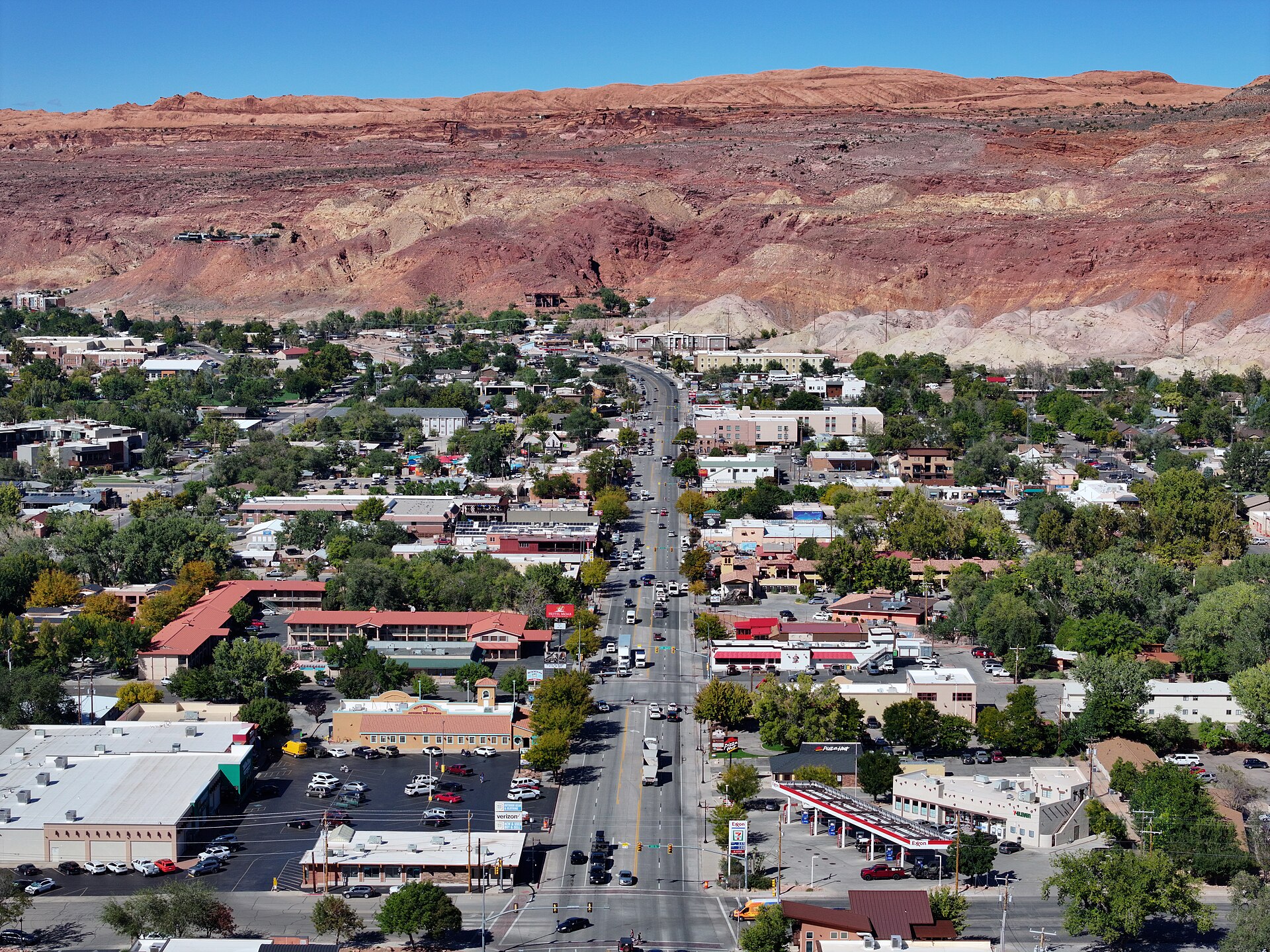
Moab is the rare town that serves two national parks at once, sitting between Arches to the north and Canyonlands to the southwest, with the Colorado River running alongside. It has long since become a full-blown adventure hub, world-famous for mountain biking on slickrock and four-wheeling through the red-rock desert, which means the town has amenities and energy that smaller gateways lack. That is also the tradeoff: Moab is busy, sometimes loud with off-road engines, and hot enough in summer to be genuinely dangerous. But no other gateway hands you two spectacular parks, a major river, and some of the best desert recreation in the country from a single base. Come in spring or fall, and go into Arches at first light.
6. Jackson, Wyoming
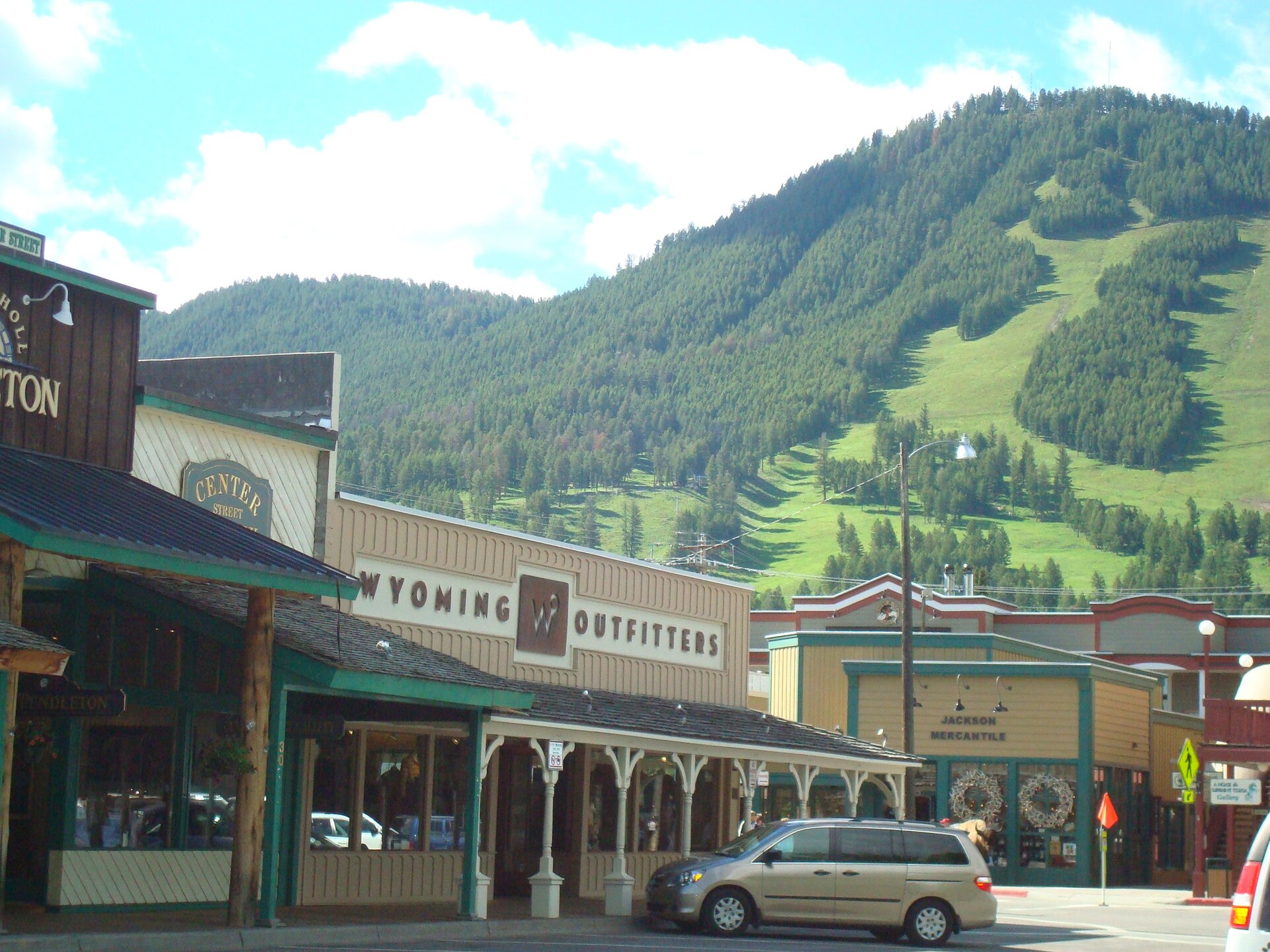
It would be an oversight to leave out Jackson, so we will not fight it. The town sits at the base of the Tetons, with Grand Teton National Park so close you can ride a 20-mile paved path to it from town, and Yellowstone about two and a half hours north. The elk-antler arches on the town square, the genuine Western character, and the museums and galleries give Jackson a life well beyond its role as a park gateway. The unavoidable caveat is cost: proximity to two national parks and serious mountain wealth have made Jackson one of the most expensive towns in the West. You pay for the location, but few locations are this good.
7. Gardiner, Montana
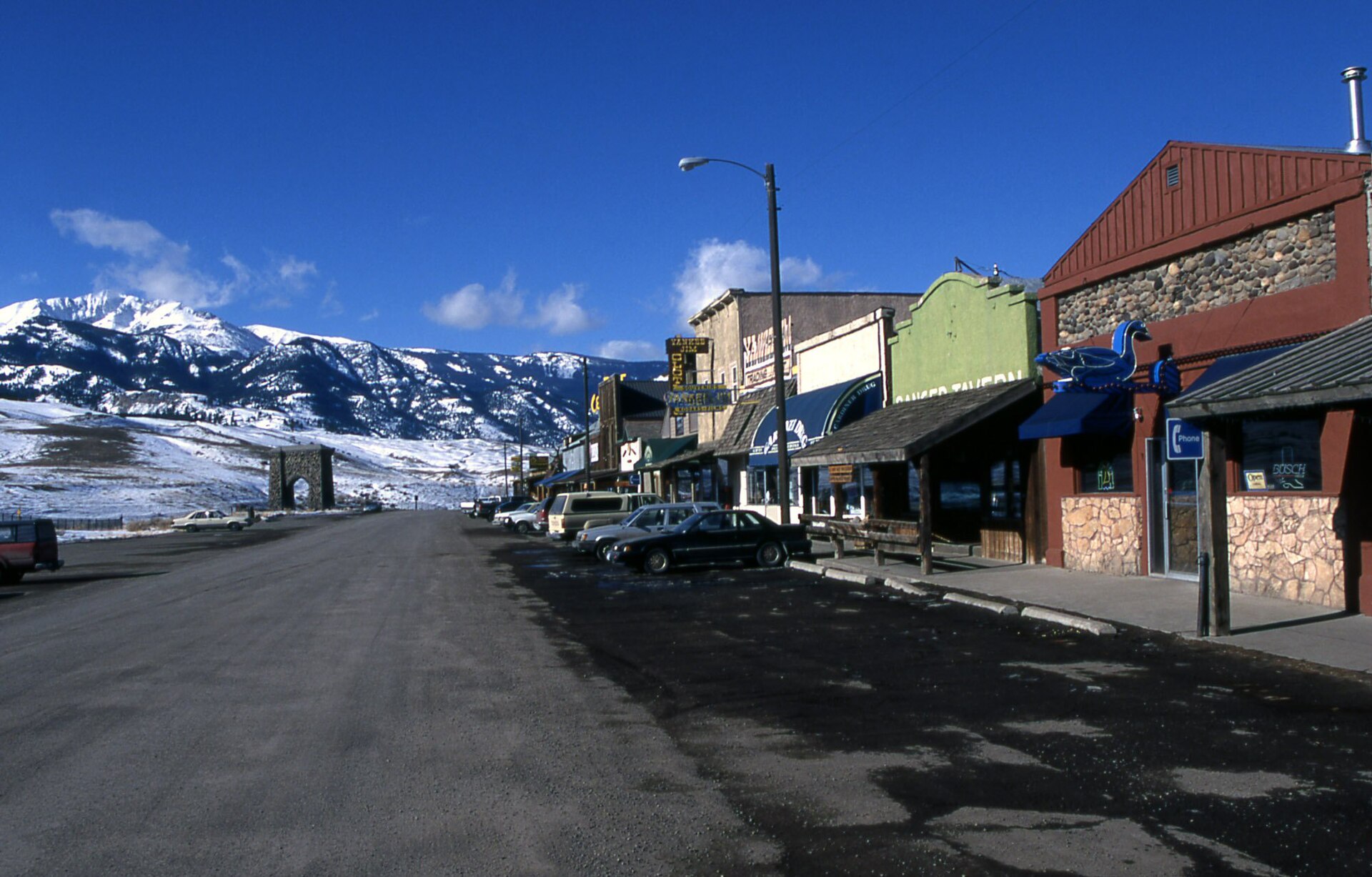
Gardiner is the quieter Yellowstone gateway and, for many, the more characterful one. It sits at the park’s original North Entrance, beneath the stone Roosevelt Arch dedicated in 1903, and it is the only entrance open to cars year-round, which makes it the winter base for wildlife watchers heading into the Lamar Valley, the Serengeti of North America, to see wolves and bison. It is small, weathered, and authentically a working gateway rather than a resort, with the Yellowstone River running right past town. That lack of polish is the appeal for people who find West Yellowstone too busy. The caveat is that amenities are genuinely limited, so it rewards travelers who came for the park and the animals, not the town’s nightlife.
8. Grand Lake, Colorado
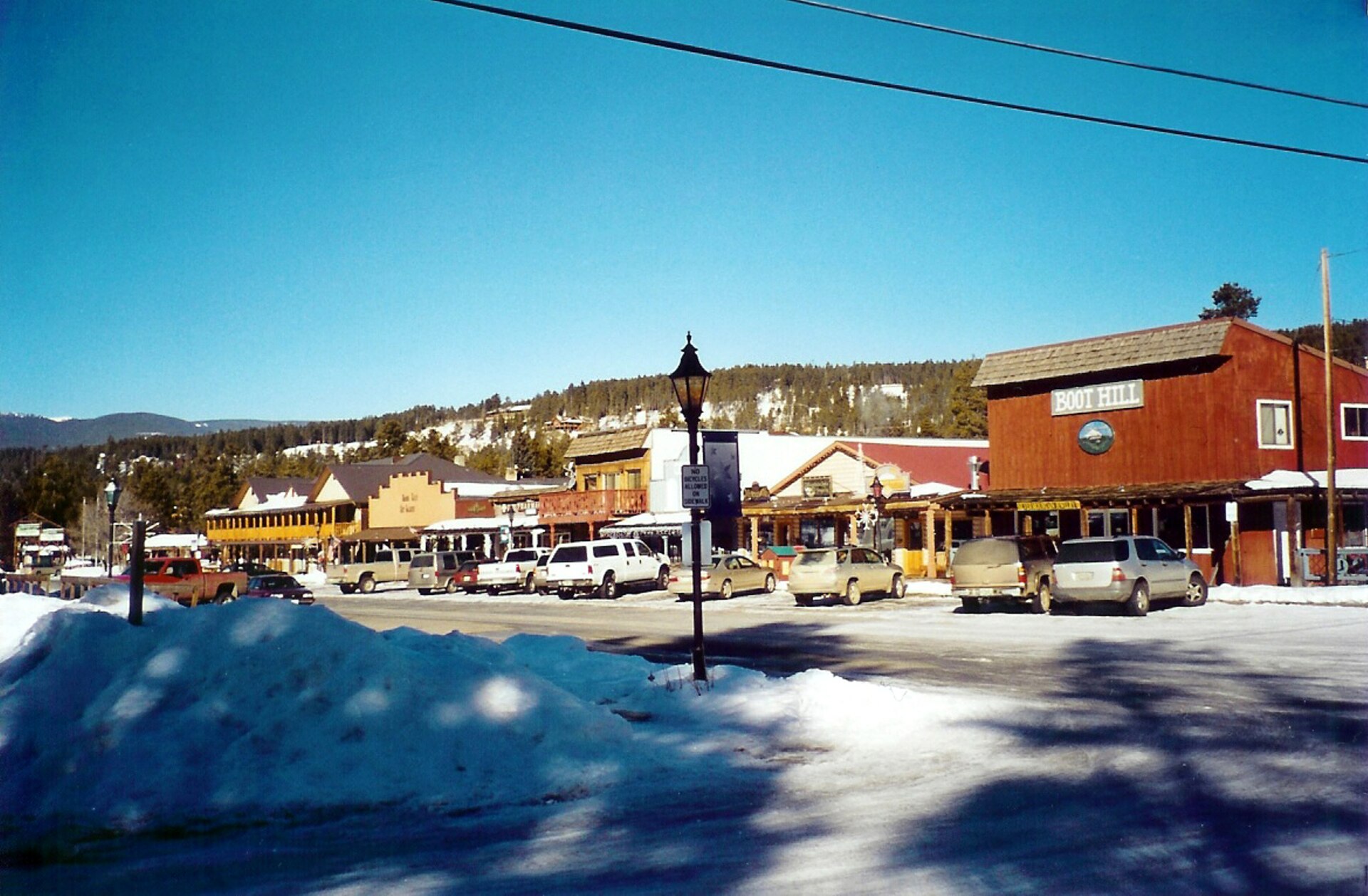
Grand Lake closes the list as the antidote to Estes Park across the mountains. It sits on the quieter western side of Rocky Mountain National Park, a village of a few hundred people on the shore of Colorado’s largest natural lake, with a wooden boardwalk from the 1880s connecting its shops and restaurants. Where Estes soaks up the crowds and the attention, Grand Lake offers the same park from a calmer door, plus a genuine lake with a public beach a block from downtown. The tradeoff is access: the Trail Ridge Road that connects the two sides is one of the highest paved roads in the country and closes with snow much of the year, so the western entrance is more seasonal and more remote. That remoteness is exactly the point.
The through-line here is self-sufficiency. Each of these seven towns would repay a visit even on a day the park gates never opened: Flagstaff for its forest and dark sky, Springdale for its cliffs and galleries, Jackson for its Western life, Gardiner and Grand Lake for their quiet. The park is the reason you come, but the town is what determines whether the trip is merely convenient or genuinely memorable.
One practical note that applies to all of them. Gateway towns live and die by the park calendar, which means peak-season crowds and lodging prices can be punishing. Wherever possible, favor the shoulder seasons of late spring and early fall, use the free shuttles where they exist, and book well ahead. The parks are getting more popular every year, and the towns at their gates feel it first.
All photographs are freely licensed via Wikimedia Commons. Photographers are credited beneath each image.